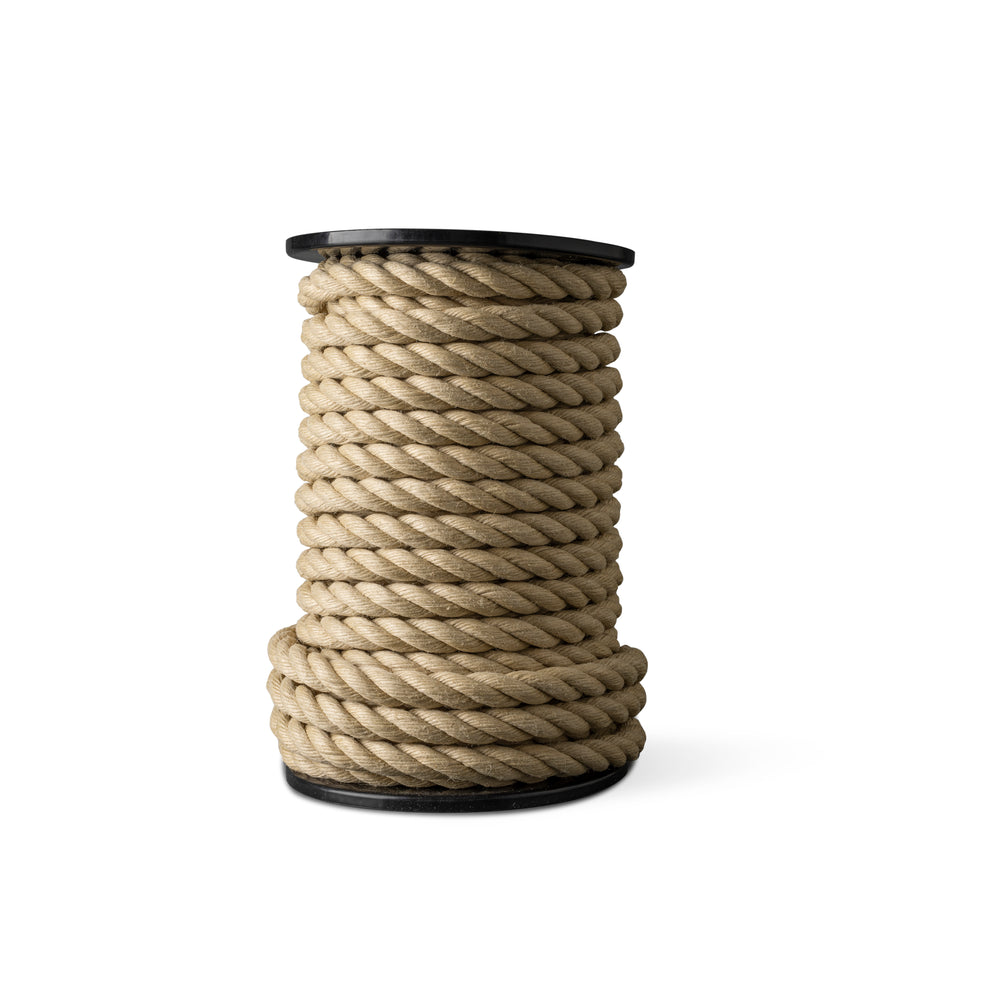
A lowering rope, also called a gravedigger's rope, funeral rope, coffin lowering rope or cemetery rope, is a strong and thick rope used to safely and controlled lower a coffin into a grave. These special funeral ropes have been used in cemeteries for generations and are still an important tool for funeral directors and gravediggers today.
A minimum of two lowering ropes are needed to manually and respectfully lower a coffin. Thanks to their large diameter and high breaking strength, these ropes offer excellent grip and maximum control when lowering the coffin.
For many families, this ritual also holds strong symbolic value. The controlled lowering of the coffin often constitutes one of the last visible acts of farewell.
What is a lowering rope?
A lowering rope is a heavy-duty rope specifically designed for use in funerals and grave digging. While natural flax or hemp ropes were primarily used in the past, synthetic alternatives are mostly chosen today.
Modern synthetic lowering ropes offer several advantages:
- higher breaking strength
- better wear resistance
- better moisture resistance
- longer lifespan
- smooth use in all weather conditions
Read more in the blog: Which synthetic hemp rope do you choose for swings and outdoor use?
What characteristics should a good gravedigger's rope have?
Not every heavy rope is suitable as a funeral rope. A quality lowering rope has a number of specific characteristics:
- sufficiently thick - Lowering ropes typically have a diameter of 20 to 25 mm. This larger diameter ensures a comfortable grip and prevents the rope from cutting into the hands during use.
- high breaking strength - A quality coffin lowering rope must be able to safely bear heavy loads. Breaking strengths of more than 3000 kg are therefore not uncommon.
- weather resistance - Because grave digging almost always takes place outdoors, a lowering rope must be resistant to rain, moisture, mud, and fluctuating temperatures.
- flexibility - Even in cold and wet weather, a gravedigger's rope must remain flexible so that it is comfortable and safe to use.
- correct length - Most lowering ropes have a length of about 7 meters, depending on the depth of the grave and the working method at the cemetery.
Go directly to our range of lowering ropes.
Why do funeral directors still use lowering ropes?
Today, there are various mechanical burial devices and grave lifts. Nevertheless, many funeral directors continue to opt for traditional lowering ropes.
There are several reasons for this:
- simple procedure
- reliable system without technology
- dignified and calm execution of the ceremony
- traditional appearance
- active involvement of pallbearers or family members
For many attendees, the manual lowering of the coffin constitutes a meaningful moment during the farewell ceremony.
Surprising uses of a lowering rope outside the funeral sector
Although lowering ropes were developed for funerals, they are now also used in other sectors.
Lowering rope in construction
For foundation work, basement construction, and restoration projects, materials are regularly lowered or hoisted back up in a controlled manner. Thanks to its length, strength, and grip, a gravedigger's rope is also particularly suitable in the construction sector.
Hoisting rope and guide rope
Masons and construction workers also use lowering ropes as a guide rope for loads moved by a crane. Due to its large diameter, the rope is comfortable to hold and offers more control than thin synthetic cords.
Restoration and heritage
During restoration work on churches, monuments, and historic buildings, sturdy ropes are often used for temporary lifting and fastening applications. Lowering ropes combine functionality with an authentic look.
Decorative applications
Synthetic ropes with a flax look are also used for:
- nautical decoration
- rustic interiors
- area demarcation
- events
- hospitality businesses
- museums and heritage sites
Thanks to their natural look, they fit perfectly into rural and artisanal projects. See the full collection of flax-look rope here.
Frequently asked questions about lowering ropes
How many lowering ropes are needed to lower a coffin?
In most situations, at least two lowering ropes are used.
What is the standard length of a lowering rope?
The most common length is approximately 7 meters.
What is the difference between a lowering rope and a regular work cord?
A lowering rope is thicker, stronger, and designed for comfortable manual use during controlled descent movements.
Are lowering ropes still used?
Yes. Despite the availability of modern coffin lifts, many funeral directors and cemeteries continue to use traditional lowering ropes.
Can you also use a lowering rope in construction?
Yes. Thanks to their high strength, good grip, and weather resistance, lowering ropes are also used for construction, restoration, and decorative applications.